
Hello engineers, welcome back to the seventh issue of The Main Thread, where we are peeling more layers of caching in our four-part series (this is the third part) inspired by “Caches Lie: Consistency Isn’t Free“. We have covered the basics and nuts-and-bolts of memory management. In this issue, we will covered the beast at the heart of every cache: inconsistency. This isn’t just a theoretical nuance but the source of those elusive bugs that keep you up at night, from minor user annoyance to major business risks. We will explore where it comes from, its real-world sting, and practical ways to mitigate and measure it, all with code to bring concepts home.
In distributed systems, caches create copies, and copies inevitably diverge from the truth. But with the right mindset and tools, we can turn this liability into managed risk. I will keep this straightforward and packed with value, drawing from the lessons I have learned in the trenches.
Whether you are battling with stale data or ensuring freshness, these insights will sharpen your approach. Let’s unpack it.
Why Inconsistency is Inevitable
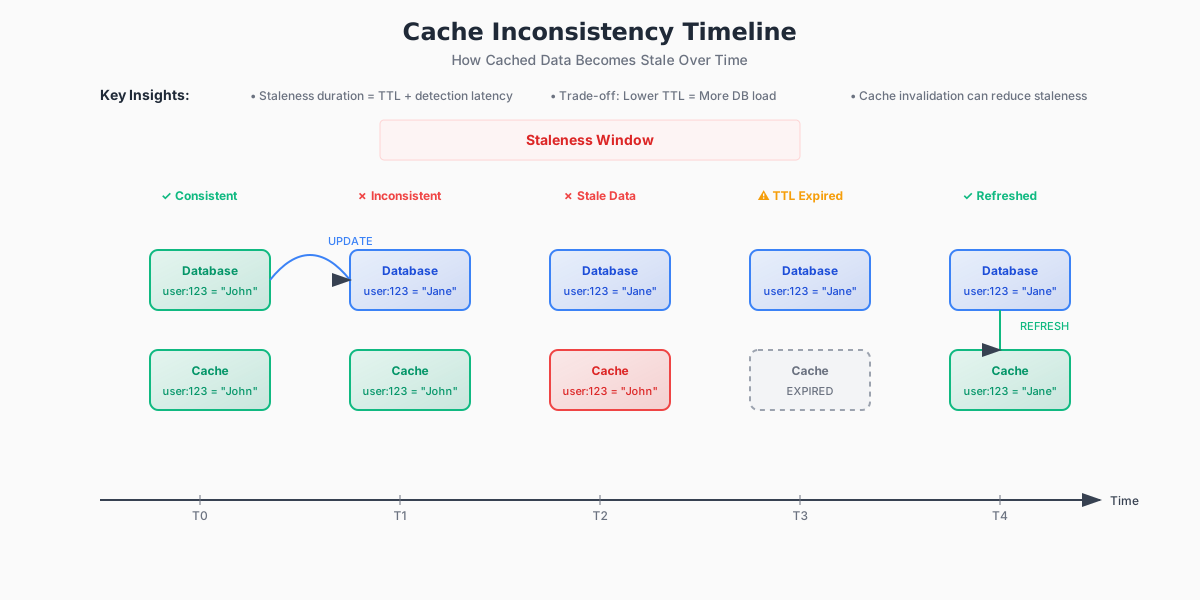
Every cache is a liar by design as it holds a snapshot of data that can drift from the authoritative source, like a DB. This problem arises because caches give priority to availability over consistency. This is often a smart choice for performance but it also means we need to manage the gaps.
Inconsistency happens in windows where reads pull old data after a write has occurred elsewhere. The impact varies - from low-impact incorrect “last seen“ time to high-impact like incorrect account balances - that can lead to revenue loss of even legal troubles. I have seen teams underestimate this, only to spend weeks tracing “intermittent“ failures back to unchecked cache drift.
Where Inconsistency Sneaks In
Inconsistency doesn’t appear out of nowhere; it stems from predictable sources. Update “propagation delays“ create a window of inconsistency, often seconds long, where changes in the backing store haven’t reached the cache yet.
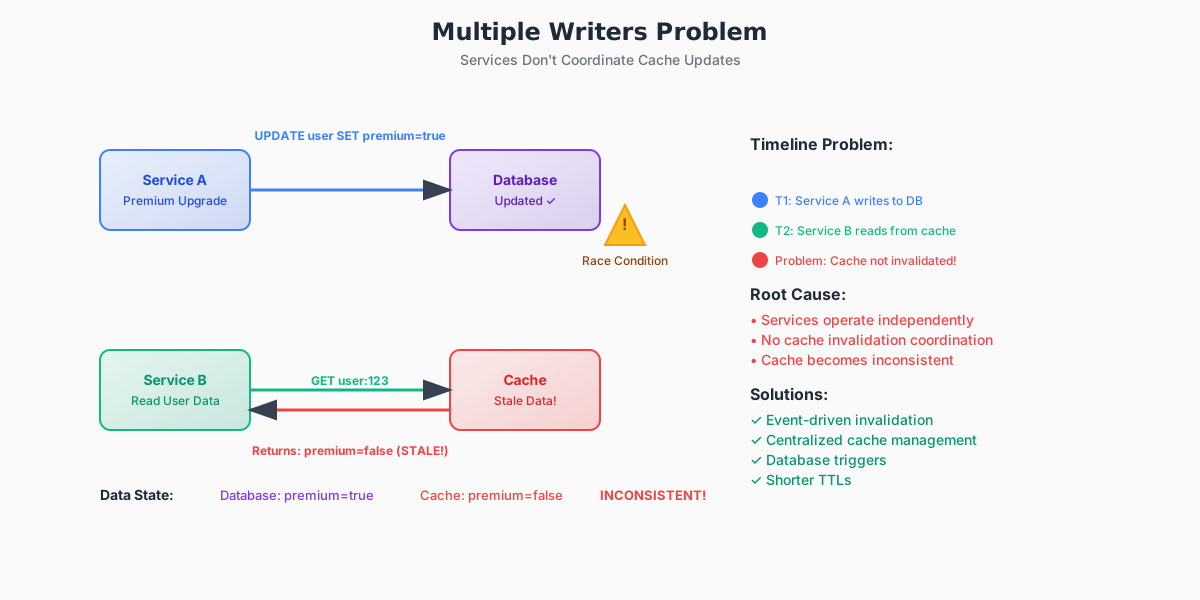
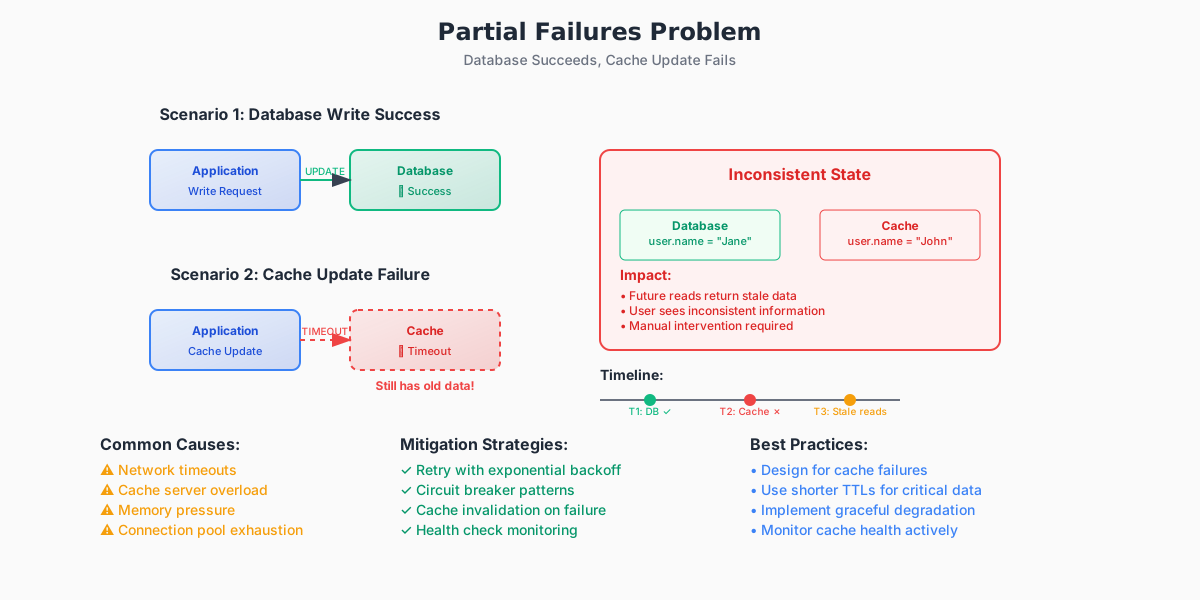
Multiple writes exacerbate this: in microservices, different parts of your app might update the same data without coordinating cache refreshes, leading out-of-order states. Partial failures add fuel to the fire - network glitches or node crashes can drop update signals, leaving caches blissfully ignorant of changes.
Imagine a write succeeding in DB but failing to invalidate the cache, and suddenly your system is serving fiction.
Zoom
Common Failure Modes and How to Fight Back
Let’s get practical with the pitfalls you encounter and battle-tested mitigations.
Stale Reads
These are the most straightforward: cache reads old value, impacting everything from user experience to compliance. To counter, use short TTLs for changeable data to shrink exposure windows, though this increases cache miss rates. Better yet, invalidate keys on writes, or version your keys (e.g., user:123:v4) so readers can detect and refresh outdated entries. For ultra-critical paths, bypass the cache entirely with synchronous reads from the source.
Thundering Herd
This hits when a hot key expires and a bunch of requests slam the backing store. This can be mitigated by request coalescing - one request handle the load while others wait or add randomized jitters to TTLs for desynchronized expirations. Stale while revalidate is another approach: serve the old date immediately while refreshing in the background.
Race Condition
These are trickier: concurrent updates can overwrite each other, leaving the cache with the wrong winner. Use compare-and-set with version checks to ensure only newer updates land, or serialize writes through a single owner for sensitive keys. Idempotent operations help too: making replays safe without duplication.
Below is a Python simulation that shows how unsynchronized updates lead to lost data:
import threading
import time
import random

class UnsafeCache:
    def __init__(self):
        self._cache = {}
        self._stats = {'writes': 0, 'race_conditions': 0}

    def set(self, key, value, source):
        time.sleep(random.uniform(0.001, 0.01))  # Simulate delay
        if key in self._cache and self._cache[key] != value:
            self._stats['race_conditions'] += 1
            print(f"RACE: {source} overwrote {key}")
        self._cache[key] = value
        self._stats['writes'] += 1
        print(f"{source}: Set {key} = {value}")

    def get(self, key):
        return self._cache.get(key)

cache = UnsafeCache()

def update_profile(user_id, thread_name):
    for i in range(3):
        profile = {'updated_by': thread_name, 'count': i + 1}
        cache.set(f"user:{user_id}", profile, thread_name)
        time.sleep(random.uniform(0.01, 0.05))

threads = [threading.Thread(target=update_profile, args=("123", f"Service-{i+1}")) for i in range(3)]
for t in threads: t.start()
for t in threads: t.join()

print(f"Final: {cache.get('user:123')}, Races: {cache._stats['race_conditions']}")
Run this, and you will see overwrites in action - proof that synchronization is non-negotiable.
From Gut Fee to Hard Numbers
You can’t fix what you can’t measure. Start with staleness ratio: sample reads and compare cache values to the source, calculating mismatches over total samples. Instrument lightly to avoid load - use versions or timestamps for efficient checks.
Real workloads are not uniform; hot keys (following Zipfian distributions) amplify issues - staleness in top 1% can impact 80% of traffic. Failures like partitions widen windows beyond theoretical models. For a deeper dive, try this simulation quantifying impact under realistic reads/writes.
import time
import random
import threading
from dataclasses import dataclass

@dataclass
class Metrics:
    total_reads: int = 0
    stale_reads: int = 0
    cache_hits: int = 0
    cache_misses: int = 0

class DB:
    def __init__(self):
        self._data = {}
        self._lock = threading.Lock()

    def write(self, key, value, ts):
        with self._lock:
            self._data[key] = {'value': value, 'ts': ts}
            return ts

    def read(self, key):
        with self._lock:
            return self._data.get(key)

class Cache:
    def __init__(self, ttl=3.0):
        self._cache = {}
        self._ttl = ttl
        self._metrics = Metrics()
        self._lock = threading.Lock()

    def set(self, key, value, ts):
        with self._lock:
            self._cache[key] = {'value': value, 'ts': ts, 'expires': time.time() + self._ttl}

    def get(self, key, db):
        current = time.time()
        with self._lock:
            self._metrics.total_reads += 1
            if key in self._cache:
                entry = self._cache[key]
                if current > entry['expires']:
                    del self._cache[key]
                else:
                    self._metrics.cache_hits += 1
                    db_entry = db.read(key)
                    if db_entry and db_entry['ts'] > entry['ts']:
                        self._metrics.stale_reads += 1
                        return entry['value'], True
                    return entry['value'], False
            self._metrics.cache_misses += 1
            db_entry = db.read(key)
            if db_entry:
                self.set(key, db_entry['value'], db_entry['ts'])
                return db_entry['value'], False
            return None, False

    def metrics(self):
        return self._metrics

# Simulate
db = DB()
cache = Cache()
keys = [f"user:{i}" for i in range(5)]
for key in keys: db.write(key, f"init_{key}", time.time())

def writer():
    for _ in range(10):
        key = random.choice(keys)
        db.write(key, f"update_{key}", time.time())
        time.sleep(random.uniform(0.5, 1.5))

def reader(id):
    for _ in range(20):
        key = random.choice(keys)
        value, stale = cache.get(key, db)
        print(f"READ-{id}: {key} = {value} {'(STALE)' if stale else ''}")
        time.sleep(random.uniform(0.1, 0.4))

threads = [threading.Thread(target=writer)] + [threading.Thread(target=reader, args=(i,)) for i in range(2)]
for t in threads: t.start()
for t in threads: t.join()

m = cache.metrics()
print(f"Reads: {m.total_reads}, Stale: {m.stale_reads}, Hit Rate: {m.cache_hits / m.total_reads if m.total_reads else 0:.2f}")
This reveals trade-offs between TTLs, hits, and freshness. Tune and observe!
Onward: Budgeting for the Inevitable
In this issue, we've demystified inconsistency. Now, in the next issue, we will cover advanced strategies, budgets as SLOs, and production ops.
Share an inconsistency tale? Reply… let's learn together.
Subscribe for more. Namaste,
Anirudh
P.S. Code in Cache Mechanics repo.

